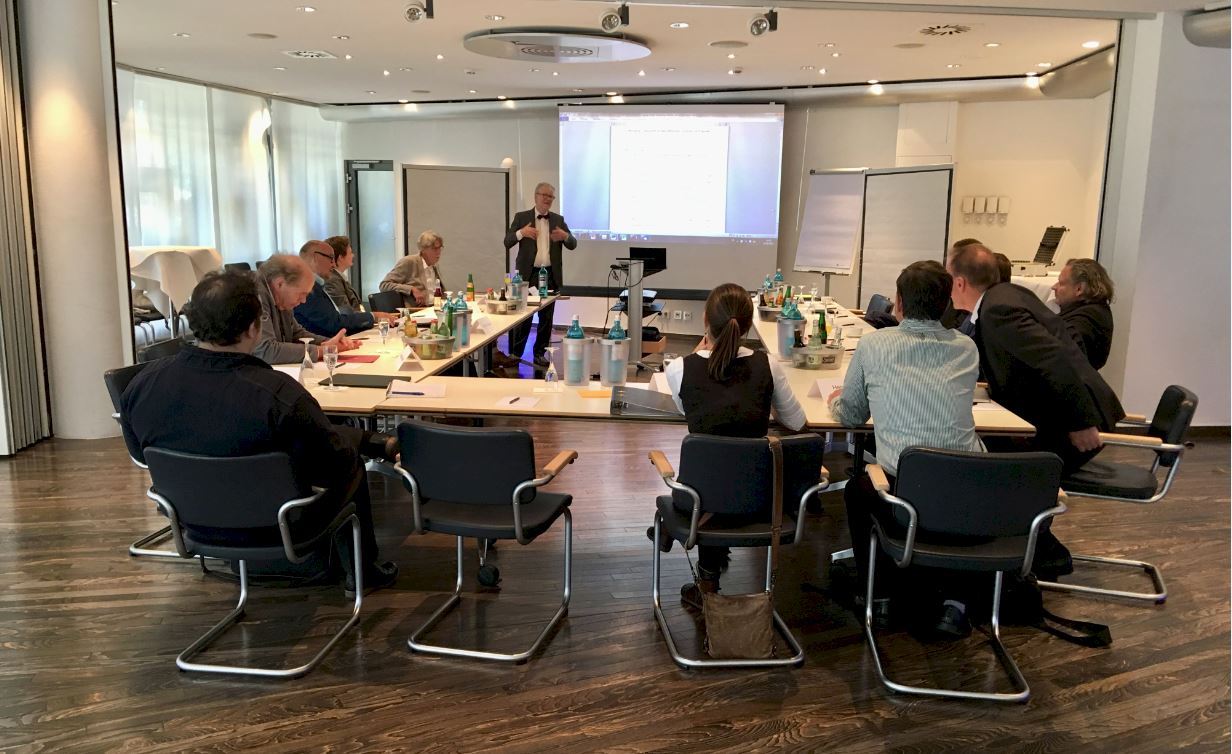
The future of a world shaped by AI
from an algorithmic perspective
Ulrich Trottenberg and Bernhard Thomas
An expert view
Dialog: Über die Zukunft einer durch KI geprägten Welt – aus algorithmischer Sicht
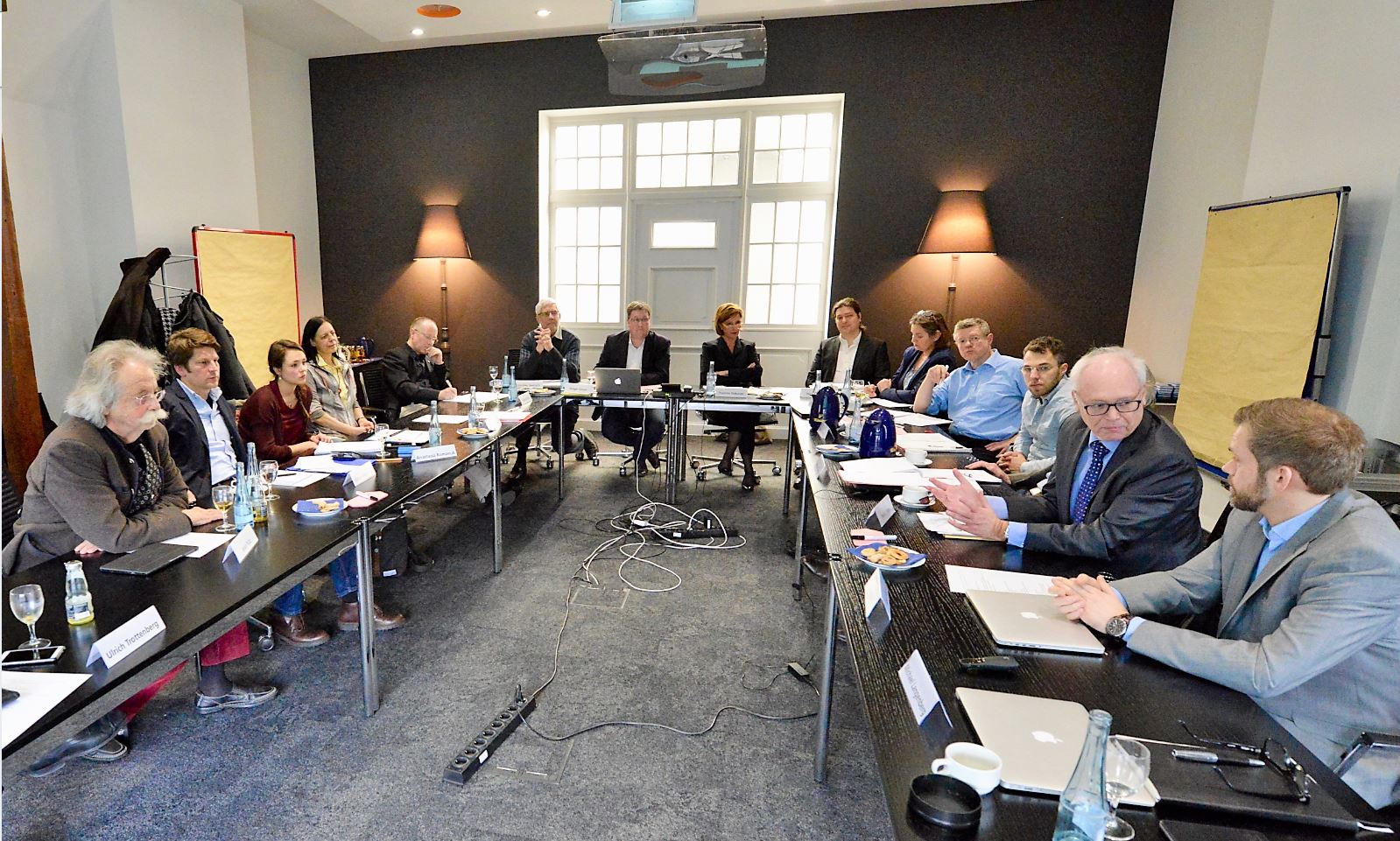
Bertrand Russell’s foresight
About 90 years ago, Bertrand Russell, one of the outstanding mathematical, literary, and political geniuses of the last century, published his book “In Praise of Idleness.” In it, he describes a (fictional) world in which people no longer have to work as much as they used to. However, people in this new world are not unemployed, but (in some cases) free from work. As far as their workload is concerned, most people in Russell’s world can devote themselves to the beauty and cultural diversity of this world.
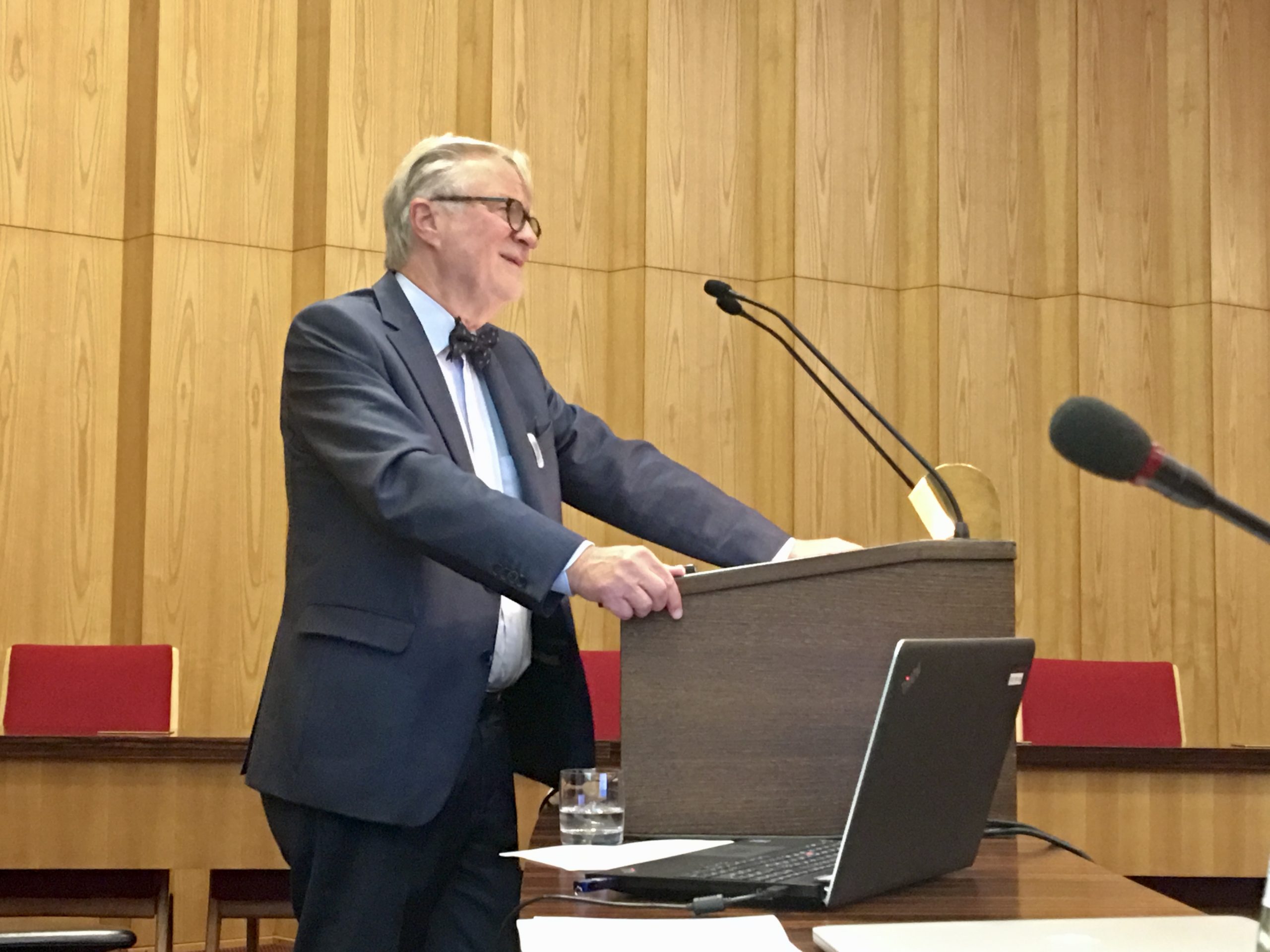
AI revolution
Are we at the beginning of such a new era with the “AI revolution”? A time in which people are much better off and getting better and better thanks to AI, robotics, and other AI–based or AI–related upheavals that we do not yet know about today? Or will the AI future plunge us into uncontrollable chaos in which AI takes over? What will the AI–shaped world look like in 10 or 20 years, and what about in the longer term?
AI is changing the work world
It is obvious that AI will fundamentally change the world of work. Many jobs will be replaced by “AI,” and almost all jobs will be significantly affected. Many young people are therefore already preparing themselves for the expected AI future and are striving to understand AI. However, many schools are still quite perplexed about the AI future of humanity.
And what will happen next with AI is really one of the big questions.
Disruptive leaps in development
Should we expect disruptive leaps in development in the field of AI on a regular basis (or from time to time?), as we saw at the end of 2022 when ChatGPT suddenly became widely available? Since then, large language models (LLMs) have changed the world in terms of communication and, with the right prompts, offer undreamt–of linguistic possibilities. ChatGPT was therefore a tremendous leap forward in terms of application and use at the end of 2022, but not in terms of methodology. This is because GPT (generative pretrained transformer) methods had been known for years, had been published, and were used intensively by experts.
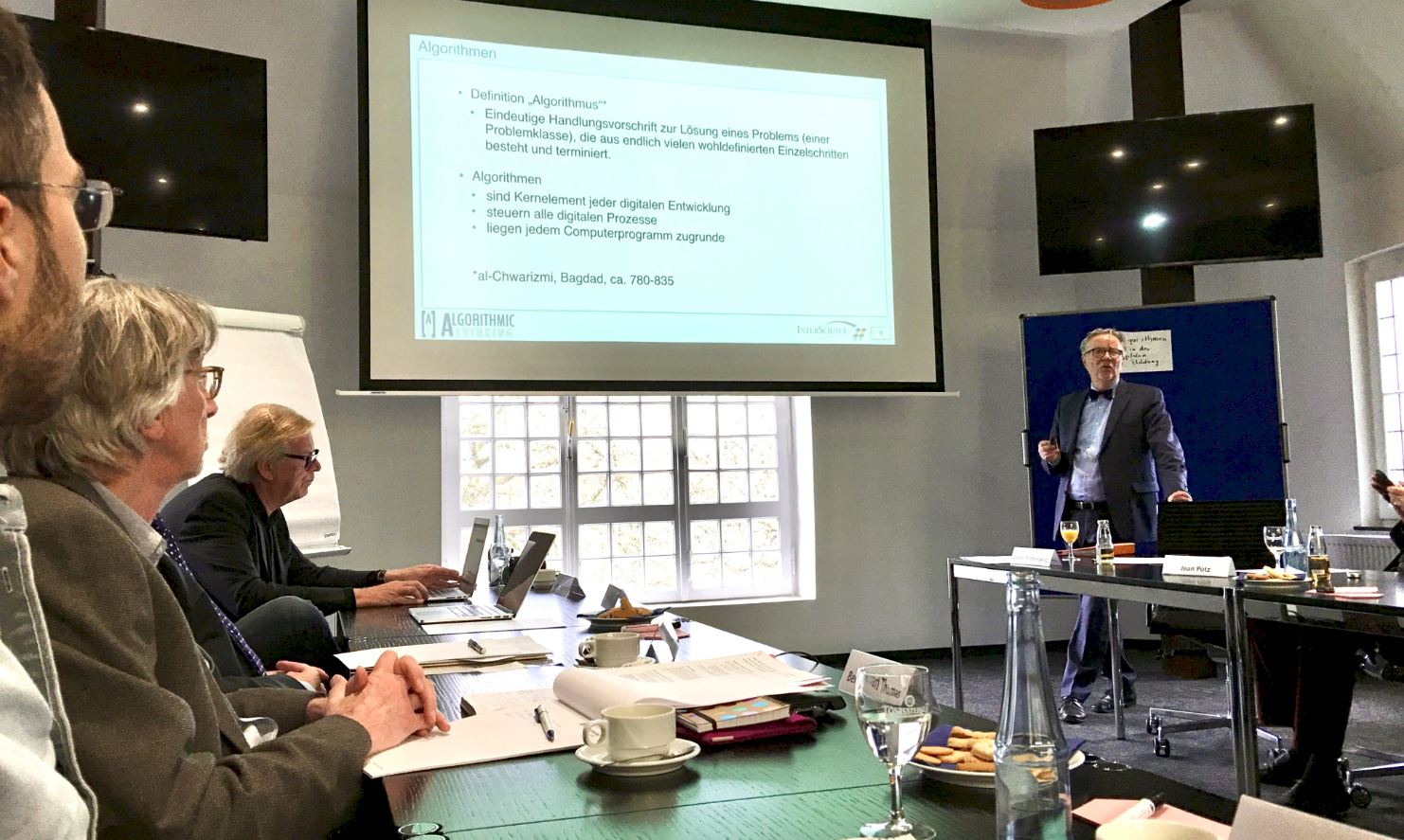
What is an algorithm?
Thanks to large language models such as ChatGPT, many people now have an idea of what AI could mean. Many are fascinated, but many are also unsettled. Most people don’t know much more than that. They know the word “algorithm” because it is used daily in the media. But what an “algorithm” is and what significance algorithms have for AI is known to only a minority of people.
So: What is this AI anyway? And what kind of construct is an algorithm?
As an algorithmic engineer, you would think I should be able to answer that clearly. But an algorithm today is not exactly the same as it was 10 years ago. Ten years ago, for example, I would have “defined” it as “an algorithm is a clear set of instructions for solving a well–defined task in a finite number of steps.”
Learning algorithms
Today, there are algorithms that raise questions about whether this definition still applies accurately: these new “learning” algorithms change themselves and adapt to new situations. So what do AI algorithm developers know more about the future of the AI-dominated world than publicists, politicians, and interested laypeople?
AI, as we know it today and for the foreseeable future, is an algorithmic, i.e., mathematical construct. It is absolutely nothing mysterious, nothing that thinks independently, nothing that has a will of its own; it is mathematics, and – perhaps surprisingly for many people – comparatively simple mathematics: a little statistics, a little numerics and optimization, a little approximation. Little theory, but all the more experimental mathematics, a great deal of algorithmic trial and error.

What harm can simple mathematics do?
If AI is nothing more than “simple mathematics,” how does it achieve the tremendous impact that impresses and surprises many people time and again? It is the trillions of data points and billions of parameters that mathematically simple AI algorithms handle so confidently.
Is the fact that AI is ultimately “just” (simple) mathematics reassuring in the sense of “what harm can simple mathematics do?” Not necessarily.
Mathematics is completely value-neutral and can be used for anything, for the greatest achievements and for the greatest catastrophes, for optimizing our living conditions and for optimizing wars of annihilation.
What can algorithmics say about the prospects for AI, here and now and in the future worldwide? Can it say anything at all about the prospects? Shouldn’t we expect that learning algorithms will take over everything anyway and continue to develop unchecked and uncontrollably? And that humanity will fall by the wayside algorithmically?
We don’t have to expect that.
Three fundamental components of AI
To estimate what we can expect, let’s look at the three fundamental components of AI:
- the algorithms, i.e., the mathematics,
- the data accessed by the algorithms,
- the supercomputers used to evaluate the AI.
We note the following:
- Mathematics is largely the same today and will remain so tomorrow. It will remain fundamentally the same in the foreseeable future and will not undergo any fundamental changes. It may be that many details can be improved and, for example, optimization algorithms can be significantly accelerated. And what “quantum algorithms” mean for AI, whether they will lead to breakthroughs or “exponential” accelerations – we cannot realistically assess that today. But mathematics remains fundamentally the same, even in the quantum world.
- Regarding the amount of available data: If we assume that the internet is representative of the amount of available data, then we can conclude that the internet is already here and continues to expand. However, apart from the early days of the Internet, the amount of text data does not double regularly from one year to the next. It may grow by a small percentage on average each year, which is also exponential growth. But it is not uncontrollable growth that cannot be managed in any way. The same is likely to apply to video data, audio data, and other types of data.
- Supercomputers are becoming increasingly powerful and faster, but even with computers, we are not dealing with completely uncontrollable exponential performance increases.
No AI catastrophes expected
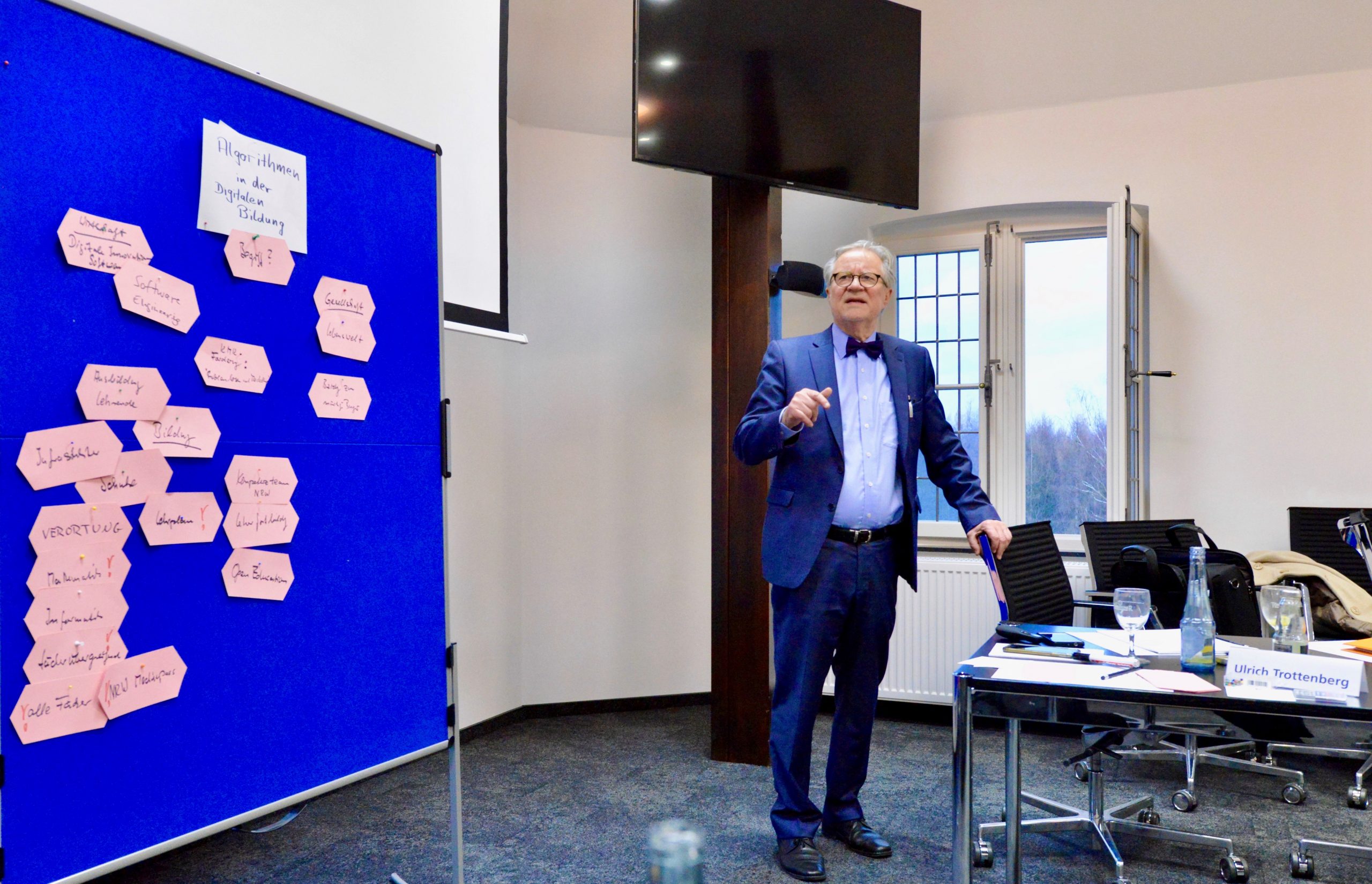
From these observations, we can conclude that, thanks to the consistency of mathematics and the “slow” exponential growth of data volumes, we do not need to expect uncontrollable, erratic developments in AI. From an algorithmic perspective, we therefore do not need to expect sudden, disruptive AI catastrophes.
No need to worry?
So, from an algorithmic perspective, we don’t need to worry about AI? Unfortunately, the situation is not quite that simple and reassuring. Despite the mathematical transparency of AI,
- loss of control and
- unpredictability
cannot be completely avoided.
Gamification applications of AI
This can already be seen and demonstrated in playful applications of AI: in the game of Go, arguably the most complex board game known, AI has been superior to the best human Go players for a good 10 years, and AI has discovered game variations that no human had previously considered as possible moves.
Can AI explain itself?
We must also mention XAI (explainable AI), the field of efforts to understand and explain the results achieved with AI in a general way. Despite intensive efforts and remarkable successes, many questions remain open and unresolved in this area as well. In summary, however, as an algorithmist, I can say: AI is mathematics. We cannot rule out the misuse of mathematics and AI once and for all. But mathematics does not take on a life of its own. Mathematics and AI are tools. We can use and control them.
www.instagram.com/p/DQP0AeejMub/
Summary
In summary, as an algorithmic scientist, I can say: AI is mathematics. We cannot rule out the misuse of mathematics and AI once and for all. But mathematics does not take on a life of its own. Mathematics and AI are tools. We can use and control them. ~ Ulrich Trottenberg

Further information

Retrospective
Videos
Note
(C)opyright 2025 notice: published with the kind permission of the authors.
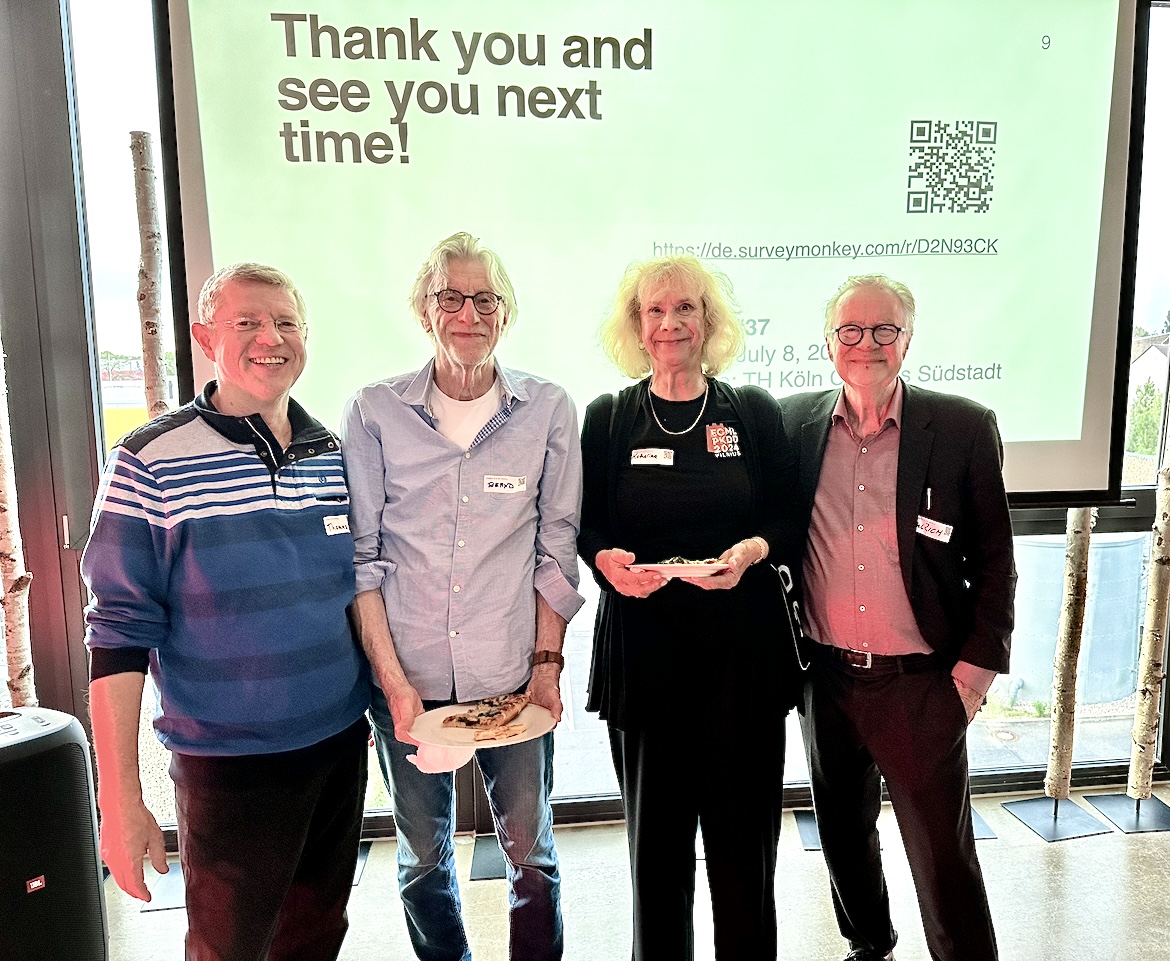
#CAIML meetup. i.e. Cologne AI ML (CAIML), with #algorithmic friends Prof. Katharina Morik, Prof. em. Ulrich Trottenberg and Dr. Bernhard Thomas.